


In a world dominated by headlines surrounding technology innovation and trends, arguably nothing continues to be as indispensable to CFO and financial teams' day-to-day workflows as ERP systems.
From cash flow management to invoice matching and accounts payable/receivable, ERP systems have long been the Swiss Amy Knife in CFO and financial teams' toolboxes.
But as organizations continue to expand and lean further into technology as a way to close operational gaps and boost performance, ERP systems have become arguably the digital transformation hurdle for financial teams and executives regardless of their industry.
According to Gartner, global worldwide IT spending is set to hit nearly $6.5 trillion in 2026 alone, a 14% jump over last year. Yet, as investments in technology continue to hit eye-watering figures, organizations routinely struggle to generate meaningful ROI from many of their digital transformation initiatives — headlined by ERP implementation, which has an estimated failure rate of 70%.
As margins continue to shrink and market uncertainty persists, organizations simply no longer have the luxury of "throwing good money after bad" in hopes of bolstering their success rates and are desperate to find ways to crack the code on ERP transformation.
And the answer isn't often a technology one. Instead, many of the challenges CFOs and their organizations face in their ERP implementation journeys are underpinned by organizational infrastructure and operational misalignment.
Operational fragmentation
Technology success is not simply a plug-and-play proposition. Technology can of course help an organization achieve new outcomes. However, for tools to be able to enact a desired change, organizations need to find ways to break down siloes, increase collaboration and build an operational foundation that can enable the success that they are hoping for.
To achieve this, businesses need to stake out clear goals from the outset and then establish measurement frameworks with these specific goals in mind — not just whether specific implementation boxes has been ticked. This requires organizations to work in concert to align people, governance and execution and then connect them with an overarching strategy.
Of course, doing this is much easier said than done and there are several common missteps that organizations need to overcome.
Transformation occurs with little input beyond IT. IT plays an essential role and reference point for implementation and practical technology specifications. However, because ERP tools are woven into nearly every organizational function, each branch needs to work closely with each other to make sure it functions in the best possible way. This in turn provides CFOs and financial teams with the performance and visibility they need into each corner of their organization.
Disjointed change management. Technology adoption depends on a long-term systematic approach to change management, not just a single one-time onboarding session. If users themselves do not see the value in tools — or do not understand the "why" and "how" behind them — it is highly unlikely they will stick. Consistent engagement with end-users throughout the implementation process cannot just shorten learning curves but streamline acclimatization to new processes and significantly boost long-term buy-in.
Data barriers. To make the best decisions possible when it comes to ERP strategy and performance, organizations must first establish clear throughlines and buy-in across stakeholders. This will allow them to build consistent data definitions and other operational structures that can improve analytics outcomes and provide a much more accurate view into various components of ERP pipelines.
Looking forward and driving successful change
It's clear that the current norms when it comes to ERP modernization — and technology transformation more generally — simply are not working as needed and must be reworked.
Unfortunately, there is not a single off-the-shelf solution for ERP transformation that organizations can just unbox, set and forget. It takes a methodical approach whereby new underlying operational foundations are set. Moreover, it requires that organizations evolve their strategic thinking around transformation. This means looking at transformation from a more holistic view where each effort is part of an interconnected symbiotic web that is aimed at organization-wide improvement versus just a standalone "one-off" exercise.
This requires a multipronged approach. Governance and accountability need to be prioritized on day one to ensure expectations and outcomes are aligned. This will allow businesses to understand not just the end goals they are looking to accomplish but if they are actually in a position to achieve them.
From there, organizations need to constantly ensure they are collaborating so any gaps in implementation can be addressed and progress is being reflected in a way that points back to the broader and departmental goals that were established at the outset. And most importantly, this needs to be fortified with an ongoing effort to enable individual user adoption, nurture "super users" and develop stickiness that can lead to long-term, real-world adoption.
If organizations can tackle these challenges and keep these best practices in mind, not only will their ERP optimization journeys become much less fragmented, but they will lay the groundwork for much more effective technology transformation for decades to come.
Read the full article published by Accounting Today.
Share this article
Contact Our ERP Optimization Professionals
Complete this form to discuss operational gaps and strategies for ERP governance and implementation.
By submitting this form, you agree to be contacted by UHY.
Author
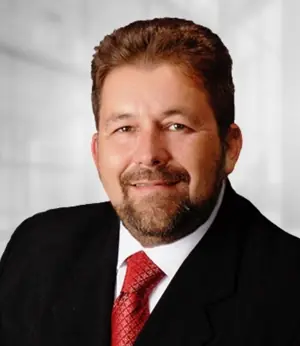
CORY MCNELEY
Managing Director, UHY Inc.
Cory McNeley is a Managing Director with UHY and leader of the Technology Innovation service line which provides, digital strategy, technology sourcing, technology automation, digital transformation, and artificial intelligence & machine learning advisory services to strengthen and transform the office of the Chief Financial Officer. Drawing from over 20 years of experience, his expertise spans international operations, manufacturing, defense and aerospace, retail, government, and service sectors.